Wall pilates took over social feeds in 2023. The trend faded, but the wall stayed useful. Here's what it changes, and when to use it.
Compare them side by side
| Question | Wall pilates | Mat pilates |
|---|---|---|
| Who holds your balance? | The wall helps | Your core does it all |
| What do your legs press into? | The wall | The air, or the mat |
| How do you check your alignment? | The wall shows you | You feel for it |
| Which moves does it train best? | Bridges, sits, push-ups, roll downs | Hundred, roll up, teaser, swimming |
| What do you need? | A bare wall and a mat | A mat |
Use the wall for what it does best
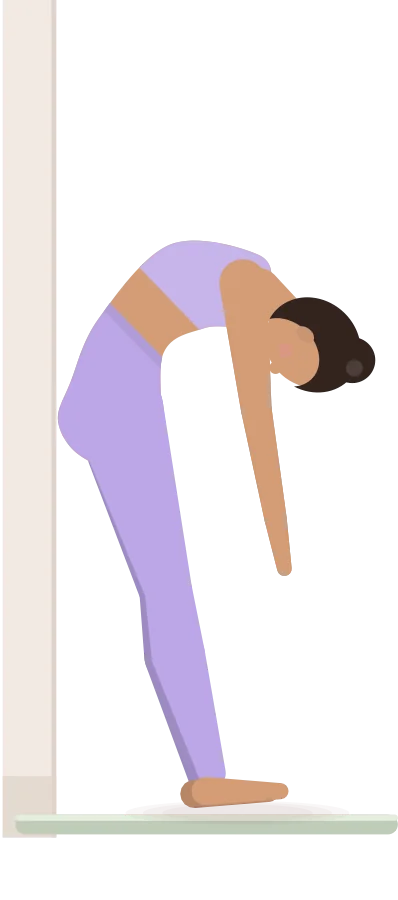
Check your spine with a wall roll down
Stand with your back against the wall, feet a step forward. Nod your chin and peel your spine off the wall one bone at a time, then roll back up. The wall tells you exactly which part of your back moved. Learn it in the Wall roll down.
Push into the wall for a stronger bridge
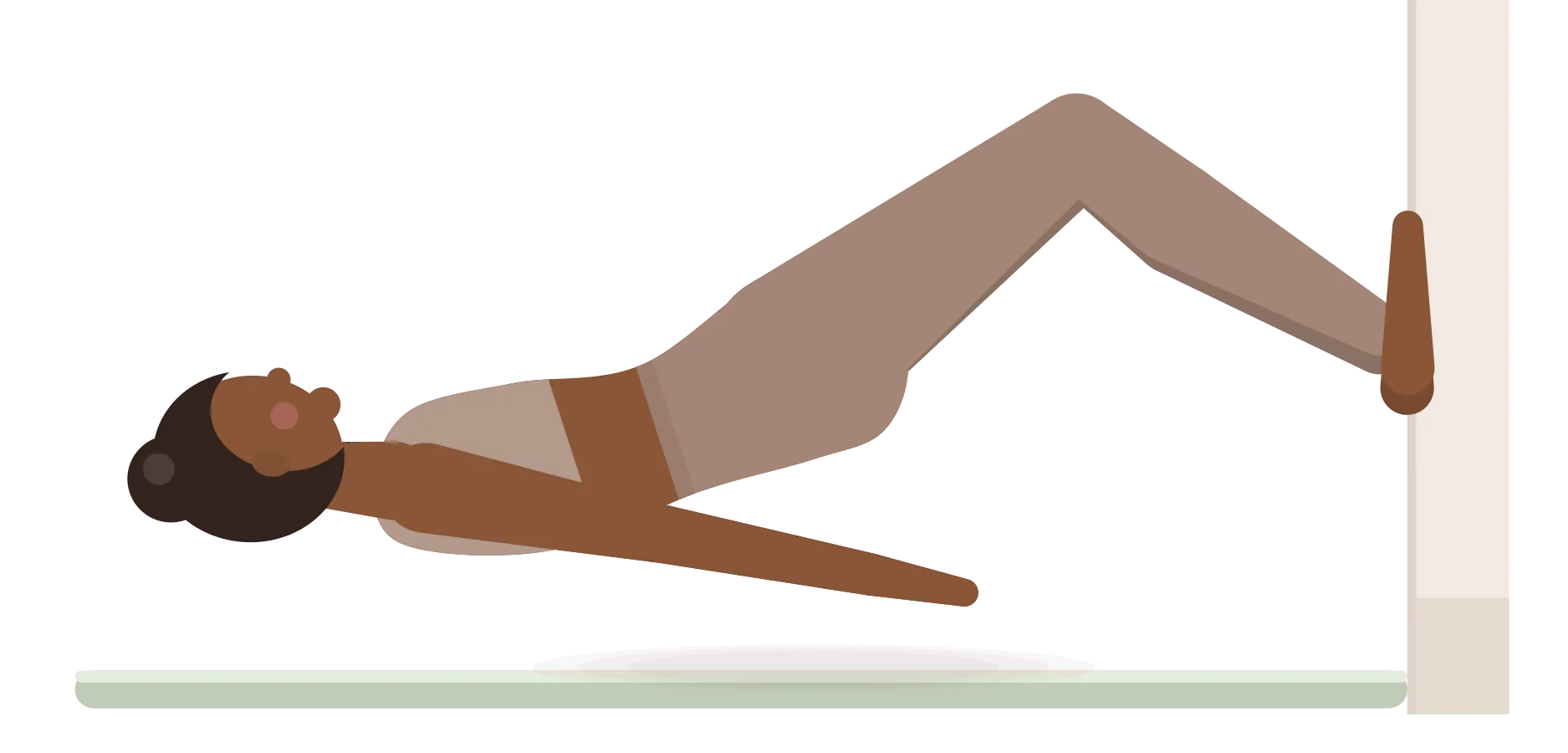
Lie on your back with your feet flat on the wall, knees bent at about 90 degrees. Press your feet into the wall and lift your hips. The angle loads your hamstrings and glutes more than a floor bridge. Try the Wall bridge.
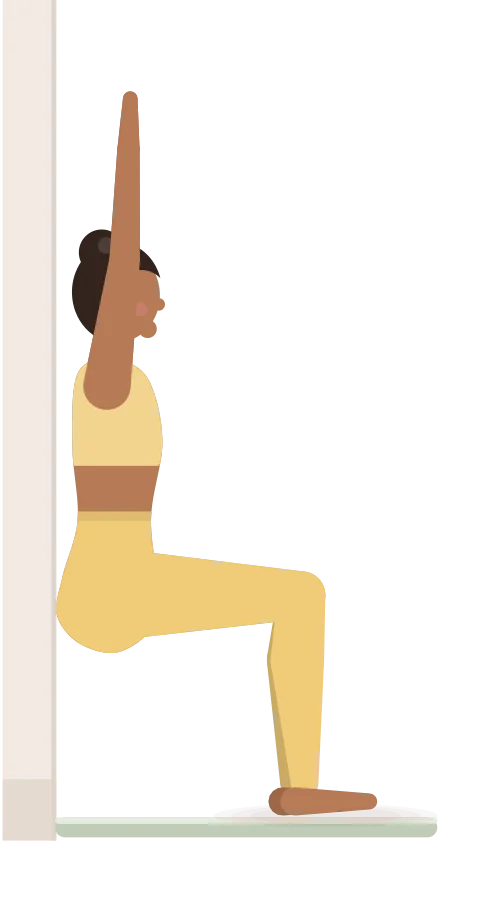
Hold a wall sit with a reach
Slide down the wall until your knees bend, then reach your arms forward or overhead while you hold. See the Wall sit with reach.
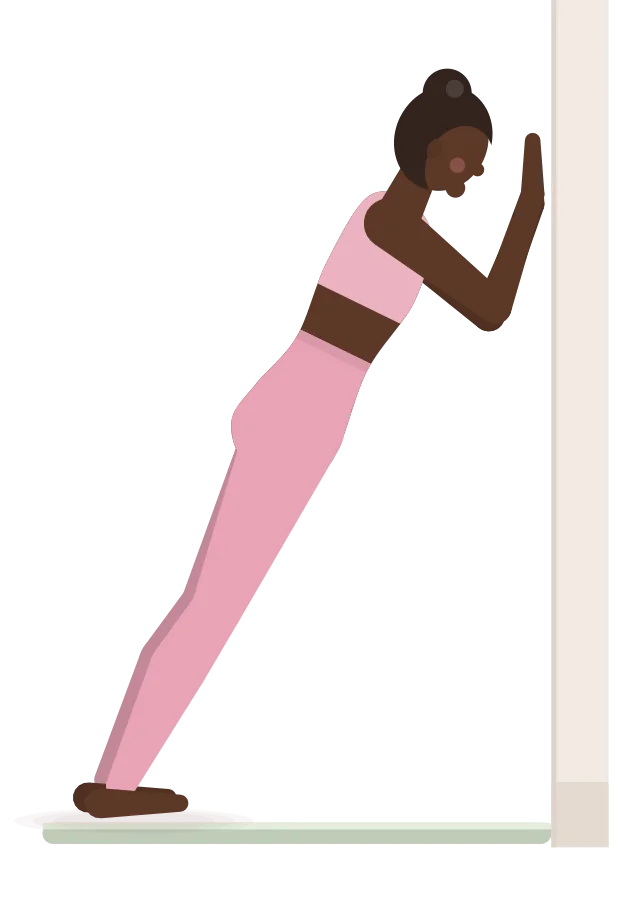
Build your arms with a wall push-up
Stand an arm's length from the wall, hands at chest height, and lower your chest to the wall with your elbows close to your sides. The Wall push-up works your chest and the backs of your arms with less load than the floor.
Keep the mat for your core
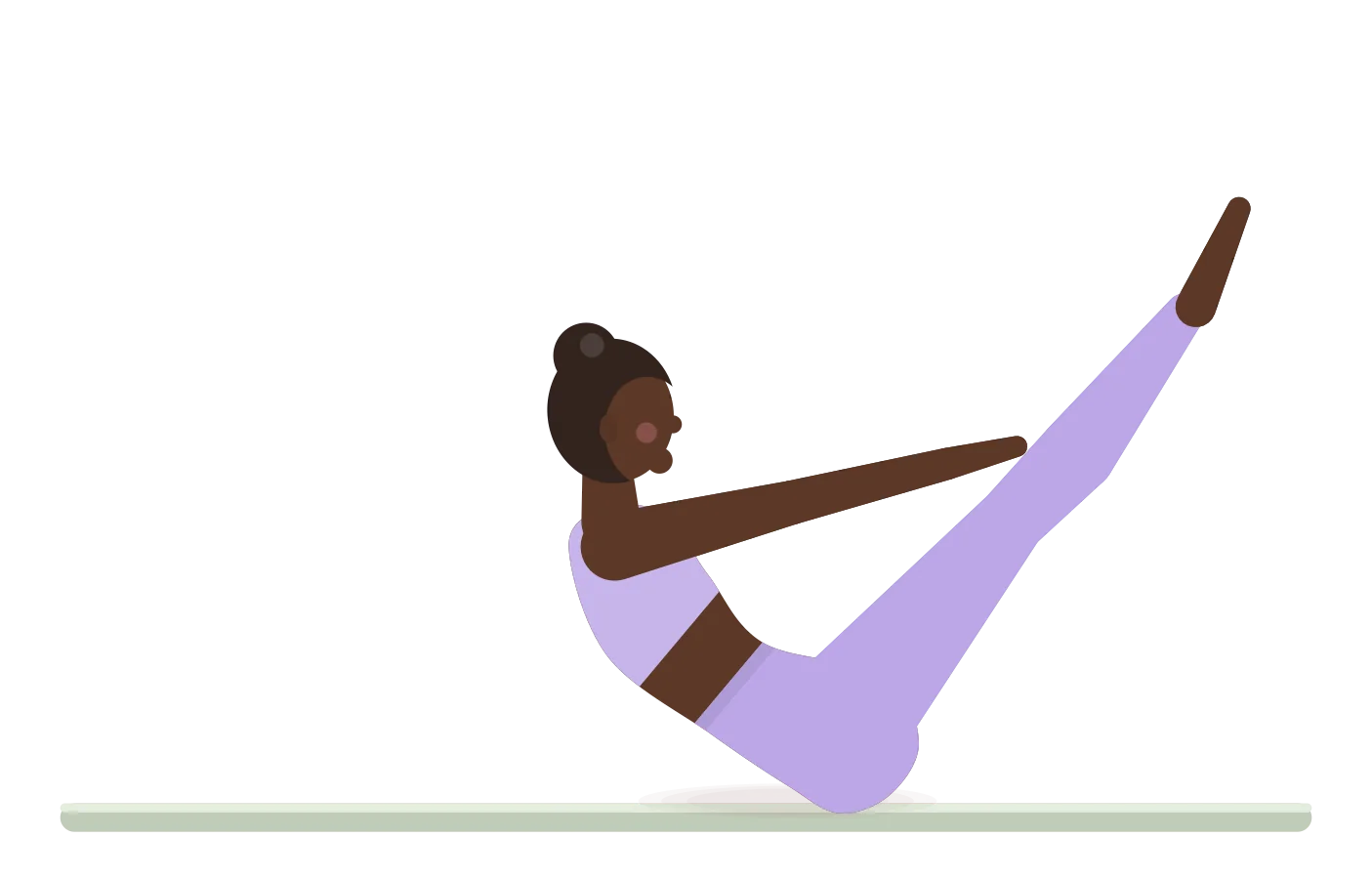
The wall supports you, and support is the opposite of what your deep core needs to grow. The moves that make pilates pilates happen on the mat: The Hundred, Roll up, Single leg stretch, Swimming and the Teaser.
Mix both into one week
- Do two or three mat classes a week for your core.
- Add one or two wall classes for your legs, glutes and posture.
- On a tired day, take a wall class. The support makes it gentler.
In Her Pilates, take the 15-minute class Use your wall, or tell me you practise at a wall and I put more wall moves into your plan.
Know the limits of wall pilates
The wall can't make a move safe if it hurts. Keep your neck long, breathe out on the effort, and stop any move that pinches your back or knees. Check with your doctor first if you're pregnant or recovering from an injury.